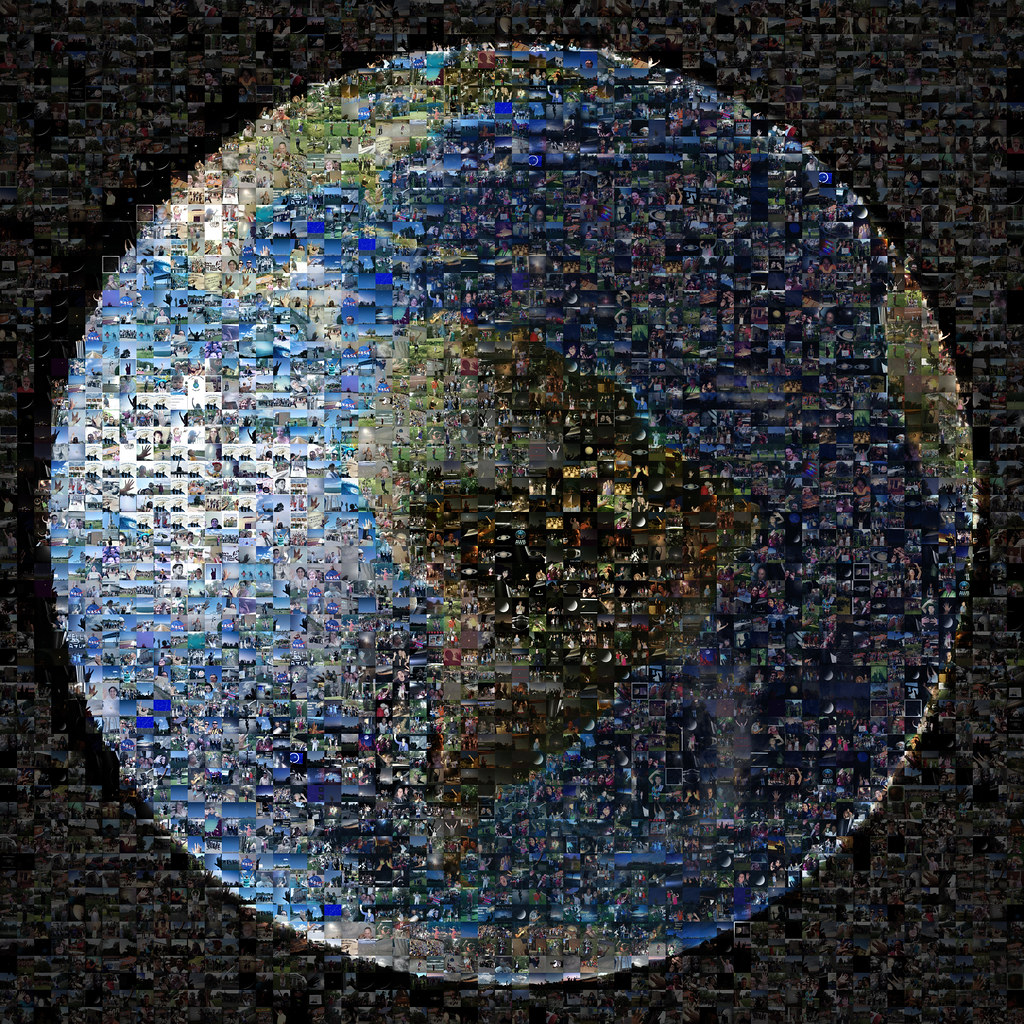
“But where are you really from?”
It is the question that usually signals the end of a polite conversation and the beginning of a negotiation. It is a demand for a category, a coordinate, a tidy box to file me away in. And I never have the answer they want.
I grew up in the strange position of being a minority in a neighbourhood that was majority-minority, just outside the centre of Bradford. I am a Muslim, and have been since my mum converted when I was a child. She is white, half-German, half-American. My birth father was Chinese-Vietnamese; his violence is why my mother left, and why she eventually sought the safety of the hijab in Brixton market. My name follows his lineage, even if I do not. My stepdad is Pakistani but identifies deeply with South Africa, having spent a long time there.
So, ethnically, I am a mess. I am a walking, talking case study in the philosophy of race, the kind of “intuition pump” a philosopher might construct in a thought experiment to break a student’s brain. If you try to map my heritage onto a standard census form, you run out of ink. And for all this global complexity, I only speak English. I hold a US passport, yet I had to apply for British citizenship and pay for it out of my own pocket, tutoring mathematics as a sixteen-year-old for £10 an hour to scrape together the fees, even though I was born in London.
Explaining this in Bradford was hard enough. It was helped by the fact that my mum was a known entity in the local primary school, a fixture in the community for fifteen years, respected for her battle against domestic abuse. In high school, I learned to immunise myself against casual racism by pre-empting it. I made the jokes first. Stereotypes are fun, sometimes, if you are the one deploying them. You roll your eyes, you play along. You survive.
Then I went to Oxford, and I realised that re-explaining everything was not just difficult; it was exhausting. And frankly, most people do not really care. To the white establishment, I was simply “minority.” But the Chinese students, rightly, did not see me as one of their own. The Islamic Society didn’t really know what to do with me either. It felt like a conservative, Pakistani-centric clique, and I was too messy, too culturally ambiguous to fit the mould. I didn’t massively try to engage, to be fair. I retreated into the work.
I exist in the margins. In my day job as a software engineer, we talk about “edge cases” – the inputs that fall outside the expected parameters, the messy data that breaks the system if you haven’t written the code to handle it. I am, in almost every social system I enter, an edge case. I am never the core.
This feeling of being a perennial outlier followed me all the way to Transylvania this Christmas, where I went to stay with my partner, Eva.
Eva is a Transylvanian Saxon, a specialist in the philosophy of Kant, and the person I hope to marry. We have built a life of meticulous planning and deep intellectual communion. She coordinates Oxford Nightline now while doing the prestigious BPhil; I work in Cambridge. We make it work with the train: I even found a way to get a return ticket from Oxford to Cambridge North for exactly £23.90. We are proud of the little systems we build to sustain us.
But bringing a Bradfordian-Muslim-Chinese-American anomaly home to a Saxon Lutheran family in Romania carries its own complications.
Her father is the priest of the Black Church in Braşov, a towering Gothic monument that dominates the city. Her mother is a computer science professor. They are the definition of “core” – rooted in a place, a faith, and a history that goes back centuries. They speak English well, and her grandmother casually remarked that I really ought to learn Chinese if I’m going to carry the name. They are warm, incredibly welcoming, and deeply empathetic. Truly the best kind of people. But even amidst their kindness, I can feel the friction of my own difference.
I need to learn German. It is the language of their intimacy, the language of the dinner table. But I lack the confidence, and honestly the aptitude, to pick it up quickly. Everyone switches to English when I am around, a courtesy that I appreciate extremely deeply, even though I often worry that I am a burden on the flow of conversation.
On Christmas Eve, I sat in the Black Church. It was 5:00 PM. The air felt cold and heavy with history. I sat there, the edge case in the pews, listening to Eva’s father deliver the sermon while she fiddled with a hand warmer. My German is broken, fragmented, but Eva helped me understand, and the feeling of the words transcended the syntax.
The sermon was on Ezekiel 37, but the theme was Gott ist heilsam anders. God is healingly different. God is “other” in a way that saves.
He spoke about how we cling to a “heile Welt” – a romanticised, perfect world of Christmas kitsch – because we are terrified of the dark. But he argued that the authentic message of the Bible is not about a perfect world. It is about a God who refuses to be restricted.
“Gott läßt sich nicht einschränken auf die gläubigen Christen,” he said. God does not let himself be limited to believing Christians, nor to a single people, nor to one religion or two.
I sat up straighter. Here, in the heart of a Lutheran stronghold, from the pulpit of a centuries-old church, I was hearing a message of radical grace. He spoke of a God who says, “Ich mache mir mit euch zu schaffen” – I am getting involved with you, I am making you my business – regardless of who you are or what you believe. He spoke of a God who bypasses the transactional “tit for tat” of human relations to meet us in a way that is ureigenste – his very own, unique, and unexpected way.
It resonated with me more than any sermon I have ever heard in a mosque. It made me think of my mother, converting to Islam not out of dogma, but because the hijab offered her a shield, a way to feel safe. She believes in a God without borders, as do I. We believe that the divine, if it exists, cannot be small enough to fit into the boxes men build for it. To hear that echoed back to me in German, in Braşov, made me feel a sense of belonging that was entirely unexpected. For a moment, the edge case felt held by the code.
And then, as is the way of the world, the “heile Welt” bubble burst.
After the service, we were standing outside, the cold air biting at our faces. A member of the congregation, a man known to Eva and her family, approached us. He wished Eva a Frohe Weihnachten, his face beaming with the community spirit the sermon had just extolled.
Then he turned to me. I offered a flailing, clumsy attempt at a reply in German.
His expression shifted instantly. The warmth evaporated, replaced by a look of suitable unimpressed confusion. He turned back to Eva, pointing at me with his eyes.
“Spricht er Deutsch?”
“… nicht so gut,” Eva replied, her voice tightening slightly in defence.
He made a face – a contortion of dismissal, a distinct “why bother” grimace – and walked off without another word.
It was a small thing. A micro-aggression, if you want to use the academic term. But it cast a shadow over my evening. It was a sharp, cold reminder that the theology of heilsam anders – of a God who welcomes the stranger and transcends the tribe – often stops at the church door. The intellectual beauty of the sermon had gone into one ear and out of the other, displaced instantly by the instinctual discomfort of encountering someone who didn’t fit the pattern.
It amused me, in a dark way. It was the perfect philosophical counter-example to the sermon, provided immediately by reality. The theology is boundless; but human nature, sadly, remains tribal.
Yet, I cannot let that one moment define the trip. The cognitive dissonance is part of the experience.
It is incredible, really, that I have such a good feeling of mutual understanding with Eva’s family. They are not the man in the churchyard. They are warm and welcoming, and every time I leave, I ache to be back. The question of values came up, as it always does when two cultures collide. I explained my mother’s conversion, her agency in it, and her refusal to limit the divine. I explained that Eva and I are on the same page – 100% sure of our shared values, despite the different labels we might have inherited.
It feels peculiar, and slightly funny, that this would be an issue for people. We talk constantly. We parse our lives with the rigour of philosophers and the tenderness of partners. We have planned a future. We know where we are going. I am incredibly proud of her journey, wherever her PhD takes her – whether it’s back to Oxbridge or to Munich. We are building our own “core,” our own little centre of gravity, independent of the confused orbits we came from.
But the question remains, hovering in the background like static: “Where are you really from?”
I don’t know. I know the trope of the “Third Culture Kid,” but even that doesn’t quite fit. That implies a culture of its own, a sort of international school homogeneity that I don’t possess. I have the Bradford grit, the Oxford education, the immigrant hustle, and the boundary-crossing soul. I am an accumulation of disparate parts that shouldn’t work together, but somehow do.
I am coming to realise that I will always be the outsider. I will always be the edge case. And perhaps that is not a flaw in the system, but a feature.
The edge case is where the system is tested. It is where the boundaries are revealed. But this offers a different perspective, not necessarily a superior one. Standing on the outside changes the acoustics. I could hear the radical invitation in Eva’s father’s sermon because I was starving for it; perhaps the man in the churchyard missed it simply because he has never had to question his right to be there.
It is nice, for once, to be in a place where I am judged, at least by the people who matter, on who I am rather than the confusing sum of my parts. I think my story is interesting. I think it is worth telling. But I am also aware of the drawbacks. I worry that people think I am grandstanding, or exaggerating the complexity for effect. I worry that by listing all the constituents of my identity, I sound like I am making it up.
But context is everything. You cannot understand the code if you don’t look at the logs. You cannot understand the man if you don’t see the jagged pieces he has had to glue together.
I wish I could just be understood for who I am, not where I am from. But I doubt that will ever happen. The world runs on heuristics, on quick pattern-matching, on the question “Where are you from?” because the answer “I am from a complicated set of circumstances that have led me to be standing in front of you” takes too long to process.
And, if I am honest, I don’t know if I actually want to be fully assimilated. There is a clarity in the margins. There is a perspective that comes from sitting in the back of a Lutheran church, understanding only half the words, but feeling the truth of them more deeply than the people who have known them all their lives.
Gott ist heilsam anders. God is healingly different.
Maybe we can be, too. Maybe being “anders” – being the edge case, the anomaly, the one who doesn’t speak the language but understands the sermon – is its own kind of healing. It forces the system to expand. It forces the definition of “us” to stretch just a little bit wider.
In the course of writing this, Eva reminds me that Kierkegaard wrote about this: the idea that we often miss what is right in front of us because we know it too well. Sometimes, it takes the shock of otherness, the friction of the unfamiliar, to truly see the thing for what it is. My distance is not a deficit; it is the lens.
I am about to head back to Cambridge now, earning my salary, paying my taxes, building my tools. But I can still hear the drumbeat of home in Bradford, and I can still feel the cold air of Braşov. I don’t know where I’m from. But I am beginning to understand where I am going.

 Hoa's Blog