There is a very particular kind of quiet that exists only in an Oxford tutorial room. It’s a dense, expensive quiet, woven from the silence of centuries, the rustle of turning pages, and the soft sigh of an old sofa as you sink into it. The world outside – the frantic clang of a Deliveroo cyclist’s bike, the insistent buzz of a phone with a message from home – recedes, muffled by thick stone and leaded glass. For two hours a week, for four years, this room, or one very much like it, becomes your universe. And in this universe, you are given the most peculiar and profound luxury: the permission to think about thinking itself.
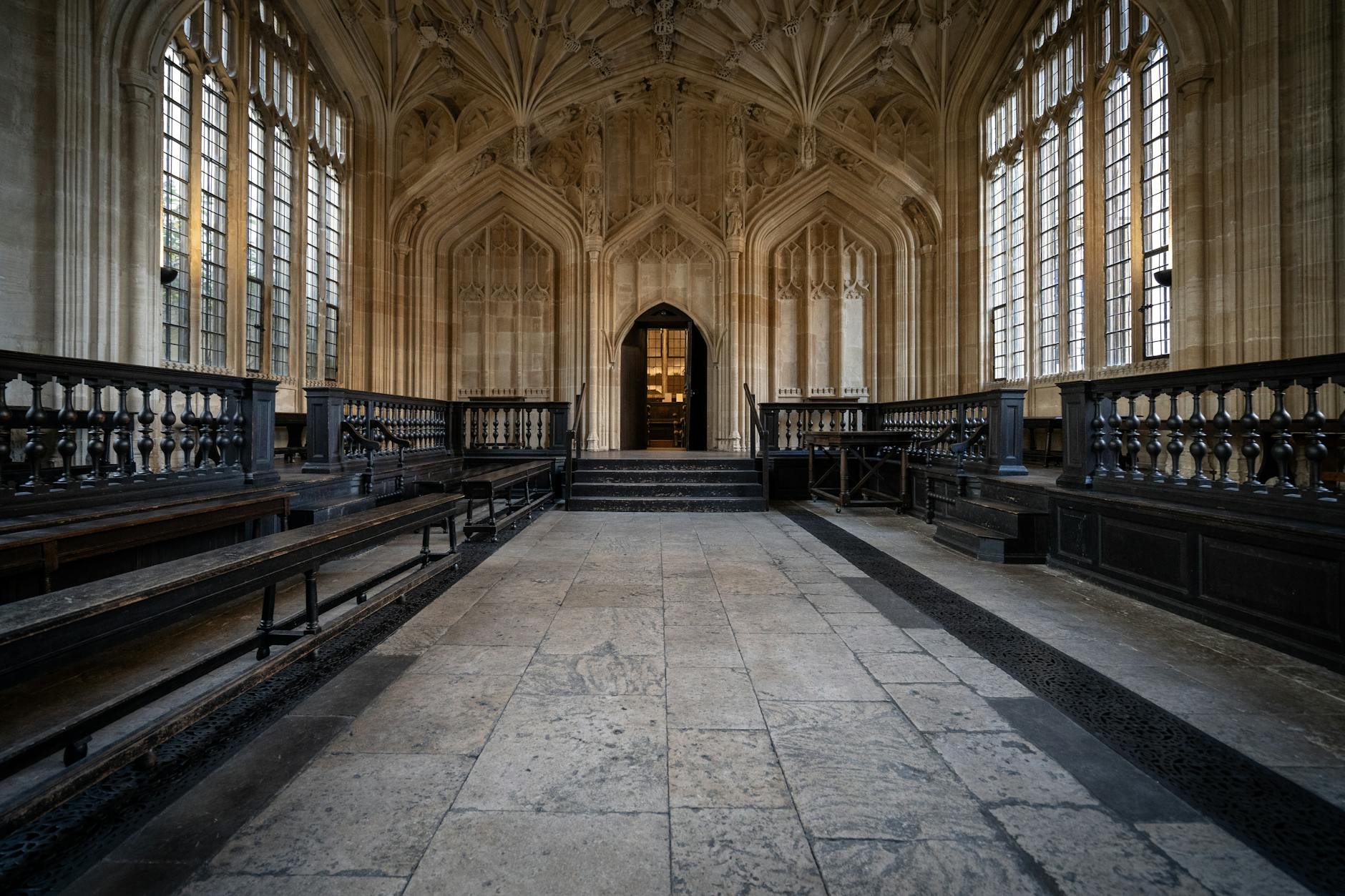
My tutors, I must say, were wonderful. They were sharp, patient, and deeply empathetic people who treated my often-fumbling thoughts with a seriousness I had rarely encountered before. They nurtured a genuine love for the intellectual chase. But love, and even gratitude, does not blind you to absurdity. And there is a profound, almost hallucinatory absurdity in sitting on a plush sofa, a cup of coffee growing cold beside you, discussing whether moral facts exist in the fabric of the universe, when back home both of your parents are really grafting.
This is the central paradox of studying philosophy at a place like Oxford. It is both the most rigorous intellectual training imaginable and, simultaneously, an elaborate, beautiful, and deeply insulated fantasy. It’s a four-year step into what Adam Curtis calls the “Land of Make Believe,” a place where powerful, elegant stories are constructed to explain the world, but which feel increasingly flimsy and shifty when held up against the messy, contradictory, and often brutal texture of lived experience.
Take things like Metaethics. Here, you are invited to climb to the highest possible peak of abstraction and look down upon the entire landscape of morality. You read Mackie’s Error Theory and entertain the notion that every moral statement you’ve ever made – that kindness is good, that cruelty is bad – is systematically false. There are no objective moral properties in the world, the theory goes; we are merely projecting our feelings onto a silent, value-free universe.
You debate these ideas. You write essays on them, honing your arguments, dissecting the logic. It’s a fantastic mental gym. But the whole time, a second, more urgent reality is running on a parallel track. I would sit there, parsing the finer points of expressivism, and my mind would flash to my mum. To the years she spent not just surviving domestic abuse, but then going on to run a Women’s Aid, a place built on the unwavering, non-negotiable premise that hurting a woman is *wrong*. Not a subjective preference, not a mere emotive utterance, but a deep, foundational, and objective truth that motivated every action and every funding application. To sit in a tutorial and treat that conviction as a philosophical token to be coolly analysed felt like betrayal. A weird, intellectualised violence against the very real struggles that made my presence in that room possible. The privilege wasn’t just being at Oxford; it was the privilege of being able to afford, even for an hour, the belief that morality might just be a fiction.
Then there was Knowledge and Reality, the main piece of Oxonian philosophical vertigo. You grapple with the brain-in-a-vat hypothesis. How do you *know* you’re not just a disembodied brain being fed electrical signals to simulate this very experience? The existential dread it’s supposed to induce feels academic, bloodless. My problem was never a lack of belief in the external world. The external world was my most pressing and undeniable reality. It was the warehouse where my stepdad sacrificed his own ambitions, a place of tangible, back-aching solidity. It was the cold dread that coiled in my stomach during my second year, when the reality of being stalked by my birth father was more terrifying and inescapable than any philosophical demon.
Perhaps nowhere did this feeling of unreality feel more acute, more “shifty,” than in the discussions around the Ethics of AI. This should have been the nexus, the point where my two disciplines met. But the conversation rarely touched the ground. Instead, we floated in the stratosphere of longtermism and existential risk. We discussed the alignment problem: how to ensure a future superintelligence shares human values. We theorised about digital consciousness and the ethics of creating synthetic beings that could suffer. Cosmic and apocalyptic.
And here, the fantasy revealed another layer of its own precariousness. I would sit there, a scholarship kid working to pay bills, being taught by a brilliant tutor in early career who could dance circles around complex arguments. And I’d know, because we all knew, that this magnificent mind was likely on a short-term, insecure contract. They were a part of the academic precariat, inhabiting the same hallowed spaces as the tenured dons but without any of the security.
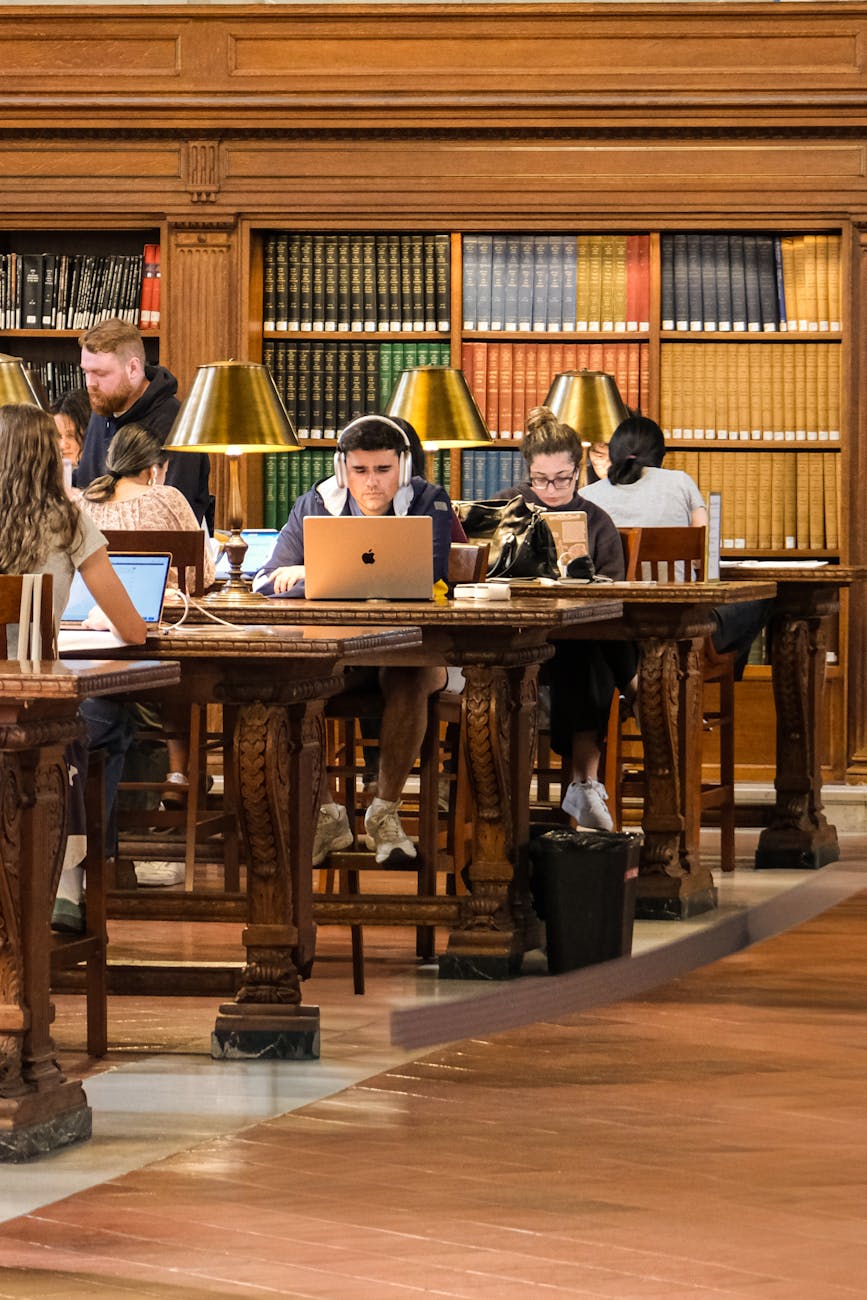
This is the shifty genius of the system. The Land of Make Believe isn’t just for the students; the staff are often forced to perform within it, too. They must project an aura of timeless, unhurried scholarship, of pure intellectual pursuit, while navigating the brutal realities of the modern academic job market. The institution itself runs on this disparity: its image built on an ancient model of stability and contemplation, its engine increasingly powered by insecure labour. We were two people, on opposite sides of the desk but on the same plush sofa, suspended in a bubble of abstract thought, both tethered to precarious economic realities that the content of our discussion was designed to ignore. It all weirdly felt like a grand act of misdirection from the small, personal, and systemic problems happening right now, even within the walls of the university itself.
This is the essence of the Curtis critique. Powerful institutions create simplified, coherent narratives to manage a chaotic world. These narratives are often beautiful and compelling, but they fail to capture the jagged edges of individual experience. For four years, I was steeped in one of the most powerful narrative-creation engines on the planet. Philosophy, as taught at Oxford, is the ultimate training in building and dismantling these elegant systems of thought. You learn to construct a flawless argument, then to pivot and dismantle it with a critique. You build a castle of logic, then you learn precisely where the foundations are weakest.
It’s an incredible skill. But you begin to realise that you’re living inside the very system you’re studying. The entire experience – the sandstone colleges, the formal dinners, the hushed libraries, the abstract debates guided by brilliant minds on temporary contracts – is a meticulously crafted story. It’s a story about the pure pursuit of knowledge, a story that says, “Here, in this protected space, we can solve the puzzle of existence.”
For a while, you believe it. You have to. You sink into the sofa and let the Land of Make Believe wash over you, because the alternative is to be constantly, painfully aware of the chasm between this world and the one you came from. But the real world has a habit of intruding. A phone call. A bank balance. A memory. And the shifty feeling returns. The feeling that the map you are being taught to draw does not match the territory you actually have to navigate.
And yet, here is the peculiar conclusion. I am deeply, profoundly grateful for my time in the Land of Make Believe. It was an illusion, but the gifts it bestowed are real. I am a product of it. The ability to write this, to deconstruct these narratives, to see the hidden assumptions behind a statement, to question the structures of power that present themselves as natural and inevitable. These skills were forged on those old sofas, honed in those dense, expensive silences.
The fantasy was the training ground. It gave me the language and the tools to articulate the dissonance I felt. It taught me how to dismantle the very arguments that are used to justify the inequalities that shaped my life. It gave me a framework for understanding the power of stories, and the danger of believing them too readily. You cannot effectively critique a system without first understanding its logic, its language, its deepest-held beliefs. Oxford taught me that. My life teaches me why it matters.
Leaving has been like waking from a strange and vivid dream, but finding my pockets full of strange and useful tools from the dream-world. The gratitude I feel is not for the illusion, but for the training I received inside it. The great challenge is to hold both realities at once: to appreciate the profound privilege of the fantasy while honouring the brutal reality it obscures. The real work begins now, trying to use the tools forged in that quiet, panelled room to make a small dent in the loud, chaotic world outside. It’s about taking the lessons from the Land of Make Believe and trying, with clear eyes and a full heart, to apply them to the land of the real.
 Hoa's Blog
Leave a comment