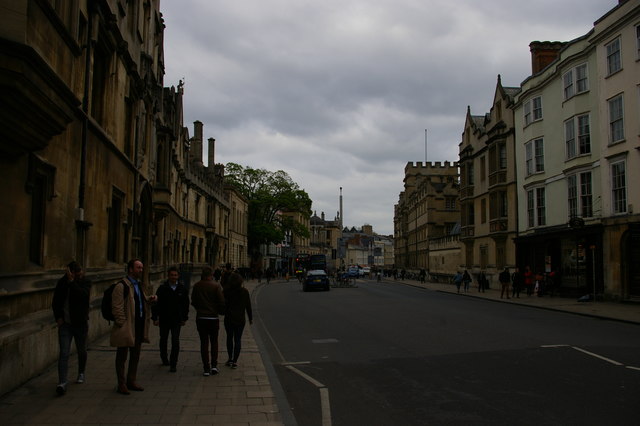
You arrive in Oxford, and the first thing that hits you isn’t the beauty, exactly. It’s the weight. The sheer, crushing tonnage of history, privilege, and expectation bearing down on honeyed stone. It’s a city built on dreaming, but whose dreams, you start to wonder? And paid for by whom? For someone like me, fresh (or not so fresh) from Bradford, carrying the psychic clutter of a life lived closer to the bone, it feels less like arriving at the seat of learning and more like infiltrating an exquisitely preserved, impossibly intricate museum where the exhibits occasionally condescend to speak.
My Bradford isn’t the Brontë moors or the curry capital marketing spiel. It’s the grit under your fingernails that never quite washes off. It’s my mum, a teaching assistant who held kids’ hands sticky with paint while navigating the wreckage of domestic abuse, who then somehow found the strength not just to survive but to lead Bradford Women’s Aid, fighting battles far more immediate and less theoretical than any debated in Oxford’s Union. It’s my stepdad, who shelved dreams of spreadsheets and balances – the quiet dignity of an accountant – for the relentless rhythm of a warehouse floor, the sacrifice etched into the lines around his eyes, all so his stepkids could get citizenship, could get a chance, the kind of chance that felt like a lottery ticket cashed in just by getting through Oxford’s gates. It’s the phone calls home, the tight knot in my stomach when my dad – the one who actually raised me – got laid off, and suddenly my Master’s year isn’t just about deciphering Kripke or debugging code, it’s about clocking 15, sometimes 20, hours a week at a tech job after a summer internship, remotely dialling into meetings while trying to ignore the simmering anxiety about whether the bills got paid back home. It’s the shadow of my birth father, a stalker whose unwanted presence bled into the supposed sanctuary of my degree, a private horror played out against the backdrop of tutorials and formals. It’s the quiet desperation heard through the phone lines late at night while coordinating Nightline, the raw, unvarnished pain of people cracking under pressures this city seems designed to both generate and ignore.
You carry this baggage – not with pride, not with shame, just as a matter of fact, like another set of textbooks – into the rarefied air. And you look around, trying to find your bearings, trying to find allies, trying to make sense of how this place proposes to engage with the world you know, the world that feels simultaneously a million miles away and breathing down your neck. And broadly, you find two distinct tribes attempting to chart a course towards a ‘better future’, both convinced they hold the map, both operating within the peculiar ecosystem of Oxford privilege, and both, from my vantage point, profoundly, maddeningly, flawed.
The Earnest Vanguard: Socialists, Activists, and the Well-Meaning Throng
First, there are the socialists, the activists, the constellation of groups orbiting the idea of social justice. Oxford Action for Palestine, XR rebels gluing themselves to things, the Labour Club, the anti-casualisation campaigners, the 93% Club trying to carve out space, Class Act fighting the good fight against unspoken assumptions. On paper, these are my people. The language is familiar – inequality, exploitation, solidarity, the need for systemic change. Their hearts, overwhelmingly, seem to be in the right place. They want a fairer world. They are angry about injustice, often articulate, sometimes even inspiring. You go to the meetings, initially with a sense of relief – ah, here we are.
But then the unease creeps in. It’s subtle at first, then less so. It’s the whiff of performance, the stylised rebellion. It’s the meetings held in ancient college rooms, wood-panelled affairs where Marx is debated with the same intellectual fervour as medieval poetry, discussions often led by voices honed by elocution lessons, by people whose understanding of the ‘working class’ feels… curated. It’s theoretical, abstracted. Poverty is a dataset, oppression a structural diagram. The visceral, grinding reality of choosing between heating and eating, the gnawing fear of the bailiffs, the sheer, soul-crushing exhaustion of working two jobs while juggling childcare – these things are understood intellectually, perhaps empathetically, but not, it often feels, known.
You sit there, listening to impassioned speeches about divestment or the evils of a particular corporation, and your mind drifts to the practicalities. Fine, divest. But what happens tomorrow to the families whose pensions are tied up in those funds? What’s the plan, the messy, complicated, real-world plan? You hear debates about the precise ideological shade of red one should adhere to, the endless splintering into factions, the purity tests, the denunciations. It feels like rearranging deckchairs on the Titanic, while back home, people are already in the freezing water.
There’s a peculiar kind of class tourism that sometimes permeates these spaces. The adoption of working-class aesthetics or argot by people whose safety net is woven from inherited wealth or connections. The genuine shock on someone’s face when you explain you can’t make the protest because you have to work for a corporation, not as a political statement, but because rent needs paying, now. The well-meaning pity that feels more alienating than outright hostility.
I coordinated Nightline. The calls weren’t about the nuances of intersectional theory or the legacy of colonialism, important though those are. They were about loneliness. Crippling anxiety. The terror of failure. Suicidal thoughts. Raw, immediate human suffering, often exacerbated by the pressures of this very institution. And you’d finish a shift, drained and heavy, and walk past posters urging attendance at a rally about something happening thousands of miles away, or a complex geopolitical issue distilled into a snappy, righteous slogan. The disconnect felt jarring, almost violent.
The focus often seems to be on symbolic victories within the Oxford bubble. Toppling a statue, changing a name, getting the university to issue a statement. These things might matter, they might be necessary steps, but they feel profoundly insufficient when stacked against the scale of the problems outside these walls. It’s tilting at windmills made of sandstone. There’s a righteousness, an unshakeable certainty, that can feel brittle. It assumes a moral clarity that the messy compromises of life, the kind my mum and stepdad navigated daily, rarely afford. They talk of solidarity, but the lived experience often feels leagues apart. You end up feeling like a specimen, the ‘working-class voice’ wheeled out to add authenticity, while the fundamental dynamics remain unchanged. They are fighting for people like me, ostensibly, but rarely with us in a way that feels truly level, truly comprehending the immediate, unglamorous struggles. It’s the difference between reading about hunger and actually being hungry.
This isn’t to dismiss their efforts entirely. Groups like Class Act and the 93% Club are vital, carving out spaces for students who feel perpetually out of sync. They articulate the microaggressions, the financial barriers, the cultural clashes that are exhausting and demoralising. They are doing necessary work. But their very existence highlights the absurdity of the situation – needing support groups simply to navigate an institution that claims to be a meritocracy. And even within these groups, the focus can sometimes feel internal – fixing Oxford, making this space more tolerable – rather than fundamentally challenging the structures outside Oxford that create the inequalities in the first place. The energy is immense, the passion undeniable. But it often feels like it’s spinning its wheels in the beautiful, ancient mud of Oxford itself, generating heat and noise but little traction on the real-world terrain where people like my family live.
The Rational Redeemers: Effective Altruism and AI Safety
Then there’s the other tribe, often overlapping with the Comp Sci corridors I haunt for my degree and my part-time job. The Effective Altruists. This is a different beast altogether, though no less convinced of its own righteousness. If the activist left operates on passionate conviction and historical critique, this world runs on cold, hard rationality, on utilitarian calculus, on the hypnotic allure of saving billions of future lives.
You walk into their talks, often funded by tech billionaires or organisations spun off from that world, and the atmosphere is… clean. Cerebral. Lots of bright young men (and some women), overwhelmingly STEM-inclined, talking about existential risk, expected value calculations, longtermism. The problems they focus on are vast, abstract, often terrifying: rogue artificial intelligence wiping out humanity, catastrophic pandemics, the heat death of the universe. The scale is cosmic, the timeframe geological.
There’s an undeniable intellectual appeal. It feels serious, grown-up, untainted by messy emotions or ideological squabbles (or so it presents itself). They wield statistics like weapons, crafting arguments of elegant, ruthless logic. Why donate to a local food bank (low impact, addresses symptoms not causes) when you could fund mosquito nets in Africa (high impact, saves quantifiable lives per pound spent)? Why worry about climate change refugees now when an unaligned superintelligence could theoretically negate all future value, forever?
As someone juggling code and Kant, I understand the attraction. There’s a seductive tidiness to it. But sitting there, listening to discussions about maximising Quality-Adjusted Life Years (QALYs) across millennia, the dissonance becomes deafening. My phone buzzes. It’s a text about the bills back home. Another unexpected expense. Another reason the hours I log for that tech company, a cog in the very machine some EAs might analyse for its potential future risks, are utterly non-negotiable.
The sheer abstraction of it feels like a different kind of privilege. The ability to focus on hypothetical future apocalypses while ignoring the rolling, present-day apocalypse of poverty, precarity, and despair that grinds people down right now. It’s a luxury afforded by distance, by security. It’s easy to calculate expected value when your own basic needs are met, when you aren’t haunted by the immediate spectre of eviction or the memory of a birth father’s unwanted attention making your own city feel unsafe.
There’s a subtle, sometimes overt, dismissal of other forms of caring, other forms of struggle. The work my mum did at Women’s Aid? Probably not ‘cost-effective’ by EA metrics. Hard to quantify the impact of offering a cup of tea and a safe space to a terrified woman. My stepdad’s sacrifice? Meaningless in the grand utilitarian calculus. The small acts of kindness, the community solidarity, the messy business of loving and supporting people through immediate hardship – these things don’t fit neatly into the spreadsheets. They are deemed inefficient, perhaps even irrational.
And the AI Safety focus sometimes feels a bit jarring. Here we are, wrestling with the potential dangers of powerful algorithms, while the current impacts of technology – job automation displacing workers like my dad, algorithmic bias reinforcing existing inequalities, the gig economy creating new forms of exploitation – are often treated as secondary concerns, mere bumps on the road to Artificial General Intelligence. We’re discussing the ethics of sentient code while people are struggling to afford the broadband needed to apply for jobs online.
There’s a cultural element too. It can feel like a club, exclusive and slightly self-congratulatory. The jargon, the shared texts, the implicit hierarchy based on who can perform the most rigorous rationalist dissection. It often feels deeply disconnected from the texture of ordinary life, from the emotional landscape where most human decisions are actually made. It’s a view from 30,000 feet, meticulously charting the terrain below while oblivious to the people struggling in the mud. The focus on long-term, potentially infinite, future lives can feel like an excuse to disengage from the difficult, intractable problems of the present. It’s cleaner, intellectually stimulating, and carries the flattering implication that you, with your superior reasoning, are one of the vital few safeguarding humanity’s entire future. It’s a powerful narrative, especially potent in a place like Oxford, which has always fancied itself as shaping the destiny of the world.
Caught Between Two Castles
So here I stand, a Bradfordian socialist by instinct and upbringing, doing philosophy and computer science at Oxford, working a tech job to keep the lights on back home, haunted by personal ghosts, and watching these two distinct currents of world-saving swirl around me. And the overwhelming feeling is one of profound disillusionment. Not with the desire to make things better, but with the ways Oxford attempts it.
Both the activist left and the EA/AI Safety bubble, in their different ways, seem to suffer from the Oxford condition: a detachment from the messy, compromised, often unglamorous reality lived by the vast majority. One side romanticises or theorises the struggle from a comfortable distance, often getting lost in ideological purity spirals or symbolic gestures. The other attempts to transcend the mess entirely, applying abstract logic to cosmic scales, potentially overlooking the immediate suffering right under its nose. Both seem convinced that the solutions lie in intellectual frameworks conceived within these privileged walls, whether it’s the correct reading of Marx or the most efficient QALY calculation.
Orwell, in The Road to Wigan Pier, turned his unflinching gaze on the middle-class socialists of his day, puncturing their pretensions, their detachment, their peculiar habits that alienated the very people they claimed to champion. He saw the gap between the Hampstead intellectual advocating revolution and the miner coughing his lungs out underground. I see a similar gap today. Between the seminar room debate on post-capitalist futures and the frantic juggling of bills and shifts. Between the white paper on existential risk and the quiet desperation in a Nightline caller’s voice.
The experience feels like being perpetually bilingual, code-switching between the language of survival and the languages of Oxford theory. You nod along in the AI Safety pizza party, understanding the logic gates and the probability curves, while mentally calculating if your paycheque will cover the bill you got texted earlier. You stand at the rally, chanting the slogans, while feeling a pang of guilt for not being able to afford the train fare home for the weekend. You try to explain the sheer, bone-deep weariness of it all, the constant low-level hum of anxiety, the weight of family responsibility, and you see the flicker of incomprehension in well-meaning eyes.
Perhaps this is the inevitable fate of the infiltrator. You see the machine from the inside, but you still feel the grinding gears of the world you came from. You appreciate the intellectual firepower, the genuine desire for change in many quarters, but you can’t shake the feeling that it’s all happening in a hermetically sealed environment, disconnected from the urgent, messy reality of places like Bradford.
My socialism hasn’t evaporated. If anything, the proximity to extreme wealth and the intellectual justifications for inequality have sharpened it. But my faith in these particular expressions of change-making, as incubated in the Oxford pressure cooker, has been sorely tested. The road from Bradford to Oxford is paved with sacrifices, anxieties, and contradictions. The road out, the road towards genuine, grounded change that acknowledges the immediate, visceral needs of people alongside the grander visions, feels harder to find. It’s certainly not clearly signposted from the dreaming spires. It feels like it needs to be built from different materials altogether, starting not with theory or calculus, but with the foundations of lived experience, with the grit and the grief and the stubborn, unglamorous hope forged in the places Oxford prefers to study rather than truly understand. The weight of this place is immense, but the weight of reality back home is heavier still. And finding a way to reconcile the two, to make one truly serve the other, feels like the hardest problem of all.
 Hoa's Blog
Leave a comment